Friday, December 6, 2013
The Shirley Temple!
For my final project I decided to create a magazine based off of the after school club that I host. I host a teen sexual health club, and I talk to the girls about sex, diet, mental health, boy problems, and I help them with life problems.The thought first came to me when I thought about body image. In media the only thing that makes it to the billboard half the time is a half naked woman who is no heavier than 110lbs. Her hair is long and skin is glowing and flawless. I also noticed that the top magazines such as, Cosmopolitan, Glamour, and even Seventeen magazine which is designed for teenagers. Do not showcase encouraging, and positive influence on loving yourself. The only thing that they focus on was fixing yourself. That something is obviously wrong with you because you do not look like the woman on this cover. This bothered me. It made me noticed that although I speak to my girls every week about loving who they are for what they are, and learning how to diet or just being healthy, they still are going to be tempted and conflicted about how they look. Noticing this I explained my idea of a magazine to them.
They loved it! They agreed with me on my idea of creating a magazine that has nothing to do with fixing yourself, but encouraging healthy eating, making it fun, but also giving awareness too the world around us. After a week of planning and making plans with the principle we were all set to being it. It wasn't until a week later did my boss decide that she did not want to really help me do this project with them, and pull the resources I thought I had in order to print and publish this zine. The girls were ready to give up until I basically said screw it, we are going to do this even if its in black and white with slim to little graphics. We were going to get our word out there. So we went back to work. I made arrangements with the teachers so we can put the zines outside of the classroom like a newspaper for students to read whenever they please. We also handed them out during the annual Christmas show, and are planning on handing them out during parent teacher conferences. This wasn't enough to the girls. So we all went to planned parenthood, got permission to leave the magazines there, and now are hopefully being seen by people outside of the school. The importance of awareness for body health and sexual health is extremely needed. I am hoping that this magazine can at least get the teens curious about it, and they at least Google it.
WORKS CITED:
http://abcnews.go.com/Health/dangerous-diet-trend-cotton-ball-diet/story?id=20942888
http://www.toptenz.net/top-10-ridiculous-fad-diets.php

CHIXFLIXMagazine: For the Feminist Filmmaker

For my final project, I chose to create a magazine that focuses on female filmmakers; the struggle of lack of recognition and support in an industry that relies on both for success. The name of the magazine is CHIXFLIXMagazine, and the article it showcases is called "Where are We Going, Where Have We Been". A lot of the issues i discuss in the article covers what we have focused on in class throughout the duration of this semester; why there are so few women prevalent behind the camera, primarily directors. My goal with this magazine was to motivate women who tend to feel discouraged about following their dreams in film and cinema. To show how we have been jipped, but also show that hope isn't completely lost. We Simply need to go out there and just do it. Nike (just kidding). It is time that we start deciding for ourselves whether or not we are capable of being successful or not & forget about those that say we can't.

There is a 'glass ceiling' that constantly hovers over the female filmmaker. Success and accomplishment is always in sight, seemingly attainable, yet never obtained. This is most certainly not because there is a lack of interest; on the contrary. As The Sundance Institute and Celluloid Ceiling research has proved numerous times again, there are more than enough women willing to risk the trials and tribulations of entering the heavily male populated industry (the fact that female to male film school graduate ratio is pretty much 50/50 should be indicator enough). Why then, in our contemporary times, have women not been able to surmount equating up to a mere 9% of the top grossing films on the charts? We can't even reach double digits?! REALLY?! It is so mind boggling to me. Especially since from my own experience attending Hunter College, women exceed men in numbers in so many of the film and media classes.
What should we attribute this lack of recognition--rather allowance, within the industry? We've said it so many times before and I am going to say it again, money. "Conventional wisdom says that producers and investors won't back female filmmakers because they don't have a track record of proven successes. But women can't build such a record if they don't have the backing to make movies" (Rolling Stone ). If women aren't even given the chance to fail, by not being able to make an attempt, how can we criticize them for not being successful? They were set up for failure from the get-go.
 Fortunately, there are groups and organizations that recognize this b-s and are making a huge amount of progress in attempting to stop it. GameChanger is fairly new organization that seeks to shift the gender disparity in the film marketplace by tapping into the enormous yet undervalued talent pool of women directors and providing the financing necessary to bring their work to audiences worldwide". As a means to end the lack of finances many filmmakers can't seem to overcome, GameChangers is prepared too finance as many as 15 feature length films of any genre, willing to offer $1 million to as much as $5 million dollars to applicants they see fit. The only requirement: the films must be directed/ co-directed by a woman. This is totally fabulous considering that, "women are systematically disadvantaged when it comes to raising financing because financing is controlled by men" (Rolling Stone).
 Similarly, New York Women in Film & Television (NYIFT) is also looking to help the female filmmakers finances. They are prepared to offer $5,000 to any female filmmaker that has completed/ is in the completion stages of a feature length dramatic film (yet they don't specify how many people will be awarded this). Applications however, were due November, 20th--sorry for the late notice guys. The program is called the Nancy Malone Marketing and Promoting Grant.
RESOURCES
- Berger, John. "3." Ways of Seeing. London: British Broadcasting, 1973. 45-64.
- Lauzen, Martha M. "The Celluloid Ceiling: Behind-the-Scenes Employment of Women on the Top 250 Films of 2012." Women in Television & Film at San Diego State University. San Diego State University, n.d. Web. 5 Nov. 2013. <http://womenintvfilm.sdsu.edu/files/2012_Celluloid_Ceiling_Exec_Summ.pdf>.
- Susman, Gary. "Where Are All the Female Filmmakers?" Rolling Stone. N.p., 06 Nov. 2013. Web. 07 Nov. 2013.
- Smith, Stacey L. "Exploring the Barriers and Opportunities for Independent Women Filmmakers." Sundance Institute. Sundance Institute, 21 Jan. 2013. Web. 15 Nov. 2013. <http://www.sundance.org/pdf/press-releases/Exploring-The-Barriers.pdf>.
Image Stereotypes In The Media
Enticement. Legs crossed. Chin down. Sultry smile. Hips cocked. Cleavage out.
Power Pose. Legs spread. Chin up. No smile. Biceps flexing. Leaning back.
If I asked you to draw these people and descriptions, who would you draw? A man or a woman? There are ads that don’t follow these stereotypes but often times women are posed exactly as the first list describes. Women are even prone to posing themselves in that manner.
It hasn’t always been that way, without cameras and mirrors, subjects who are first having their picture taken don’t pose their bodies in a way that demonstrates their gender. For examples, photos of Native Americans by Edward Curtis in the 1800’s or photos of aborigines in Brazil. It seems that people who have images available are much more prone to pose themselves to show off the desired features.
Looking back to early paintings you’ll see the same poses in the media today. For my project I began by researching women’s images throughout the last several hundred years. I looked up paintings by Jacopo Palma Vecchio, Renoir, the early portrait photographers like Curtis, movie stars from the 1910’s on, current day work by Annie Leibowitz, as well as common ads. Venis and Cupid c. 1523-24 Jacopo Del Sellaio
 Die großen Badenden, Pierre Auguste Renoir (1841-1919)
 Untitled, Edward Curtis (1868-1952)
 Katherine Hepburn (1938) by Franz Planer
  Rit dye advertisement, via Found in Mom’s Basement
 Swedish American Apparel Ad (Unknown Photographer)


And finally, my project was to capture what people thought the stereotypes of women in the media were. I set up a shoot and asked people to pose in three different poses. 1. Pose in a masculine manner 2. Pose in a neutral manner and 3. Pose in a feminine manner. The results were amazing. My only regret is that I was unable to take photos of more people. 


Full shoot available on flickr at http://www.flickr.com/photos/110807123@N07/?deleted=11247226933
Image Sources:
http://s3.amazonaws.com/magnoliasoft.imageweb/bridgeman/fullsize/fit86014.jpghttp://commons.wikimedia.org/wiki/File:Pierre-Auguste_Renoir_021.jpghttp://upload.wikimedia.org/wikipedia/commons/1/16/Edward_S._Curtis_Collection_People_001.jpghttp://www.doctormacro.com/Movie%20Summaries/H/Holiday%20(1938).htm http://www.mintagevintage.com/fashion/1970s/how-date-vintage-clothing-1970s/http://www.businessinsider.com/if-men-posed-like-female-american-apparel-models-2013-5

Women and eSports
For this project, I took a look at two video games played professionally (Starcraft 2 and League of Legends) and attempted to explain the appalling lack of successful female players. To do so, I discussed reasons why it is difficult for women to break into eSports. Briefly, rampant misogyny and a small player base have lead to a disproportionately small number of women who play video games professionally.


The experiences of several women are integral to this project. Team Siren's brief history shows the impact that community backlash can have on a team comprised entirely of women. The careers of Eve and Aphrodite serve as examples of skilled players who were recruited directly into top level teams but who were unable to achieve any real success. And Scarlett is the only female professional gamer in either game who has been able to achieve a measure of success.
Fixing this situation is difficult. It will take time, and an enormous amount of effort to make eSports communities places where women feel welcome.
Full article at: http://wamfinal.blogspot.com/


(from fatuglyorslutty.com)
The experiences of several women are integral to this project. Team Siren's brief history shows the impact that community backlash can have on a team comprised entirely of women. The careers of Eve and Aphrodite serve as examples of skilled players who were recruited directly into top level teams but who were unable to achieve any real success. And Scarlett is the only female professional gamer in either game who has been able to achieve a measure of success.
Behold, the only video clip I will be showing.
Fixing this situation is difficult. It will take time, and an enormous amount of effort to make eSports communities places where women feel welcome.
Full article at: http://wamfinal.blogspot.com/
Women and Insanity in Movies
My Final project is an interactive web page of the true short story "The Yellow Wallpaper" by Charlotte Perkins Gilman and a movie trailer. I used quotes from the original short story to relate my images to the experience of traumatization accompanied with being forced to stay isolated for long periods of time. Information about the interaction of Dr. Weir Mitchell and Charlotte Parkins Gilan gives background about the majority of the cases in which a woman was diagnosed as insane by a male doctor. I also edited movie trailers and made a YouTube video about Women and Insanity in movies. I use these trailer to map out information about hysteria and movies dealing with women
who enact different types of “insanity”.


who enact different types of “insanity”.

Why men could put their wives in an asylum.
The origins of the word hysterical comes form the word "hysteria" from the Greek word hystera, meaning "womb." Originally "hysteria" linked certain nervous disorders and diseases of the female sexual and reproductive organs. It was thought that there was a direct connection between these physical pathologies localized in the female organs and certain nervous symptoms. Being a women resulted in development of nervous diseases because of the possession of the female sex organ. 
Actually a workout...but you get the point.
In the 18th
and 19th century a husband can place his wife in an asylum. As
male staff and doctors are examining her, she is further identified as insane.
Some of these women just wanted to be independent, or refused to have sex with
the doctor."Then, however, women could find themselves labelled insane and locked up in madhouses for a range of conditions – from postnatal depression to alcoholism or senile dementia, and even for social transgressions such as infidelity". This goes back to
history and the Salem witch trials. If a woman had an independent opinion she wished
to voice, she was accused of being a witch as an easy way of getting rid of
her. This was also used when a widow held a business or land that a rivalry family
wanted; all they needed was to accuse her of sorcery. Some insane medical practices were used on these women including #6 Lobotomies, #2 Trepanation and #1 Hysteria Cures.
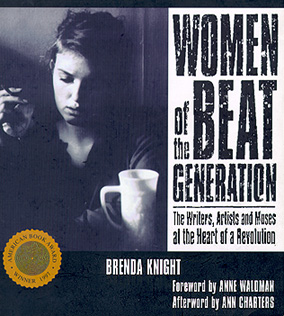
Elise Cowan was a woman of the beat Generation. (This is not her)
Women were unjustifiably placed in mental institutes throughout history. As expressed from a question to Gregory Corso, ‘Why were there so few women among the Beat writers?’ and [Gregory] Corso, suddenly utterly serious, leans forward and says: “There were women, they were there, I knew them, their families put them in institutions, they were given electric shock. In the ’50s if you were male you could be a rebel, but if you were female your families had you locked up." An example of a woman who was locked up was Elise Cowan [from the beat generation] who tried to exert her independence, becoming part of the New York Beat society, and her parents did as too many have done throughout history to wayward daughters, and had her confined to a mental institution. Trapped in a life of conformity, Cowan committed suicide."
For the YouTube video I used:
Girl, Interrupted - Trailer
He Is Mine, Not Yours Trailer
Stepmom - Trailer
BLACK SWAN - Official HD trailer
Passion Official Trailer #2 (2013)
HYSTERIA Trailer 2012 Movie
The Raven Trailer 2012 Movie
My Super Ex-Girlfriend Trailer (2006)
Enough Movie Trailer 2002 (Jennifer Lopez)
Works Cited
"The 10 Most Insane Medical Practices in History." Cracked.com. Web. 6 Dec. 2013.
"A Brief History of the Salem Witch Trials | History & Archaeology | Smithsonian Magazine." Smithsonian magazine. Web. 6 Dec. 2013.
"The feminisation of madness is crazy | Mind your language | Media | theguardian.com." the Guardian. Web. 6 Dec. 2013.
"Freud, "Aetiology of Hysteria"." UW Courses Web Server. Web. 6 Dec. 2013.
"fuck yeah beatniks." fuck yeah beatniks. Web. 6 Dec. 2013.
Gilman, Charlotte P. The Yellow Wallpaper. New York: Feminist Press, 1973. Print.
"Online Etymology Dictionary." Online Etymology Dictionary. Web. 6 Dec. 2013.
"The Rest Cure and Dr. Weir Mitchell | Neurasthenia & The Culture of Nervous Exhaustion." Historical Exhibits: Claude Moore Library | Just another site. Web. 6 Dec. 2013.
"Sent to the asylum: The Victorian women locked up because they were
suffering from stress, post natal depression and anxiety." Mail Online. Web. 6 Dec. 2013.
"Short Stories: The Yellow Wallpaper by Charlotte Perkins Gilman." east of the web. Web. 6 Dec. 2013.
""What Sort of Mental Health Problems" by Penny Halliday." Bridgewater State University Virtual Commons. Web. 6 Dec. 2013.
"WHO Gender and women's mental health." , Web. 6 Dec. 2013.
"Women of the Beat Generation." Beatdom. Web. 6 Dec. 2013.
♥♡BARBIE COLLECTIVE♡♥
For my final project, I initially wanted to raise awareness that young girls are using social media websites too soon, and this was potentially damaging to their self-esteem during formative years through an elaborate Rookie-Mag style zine to insert into this semester's issue of Cult. Magazine.
The release date for Cult. got delayed, and I was inspired as I went through my old dolls and accessories. My mother gave me a book called Mondo Barbie an anthology of radical Barbie poetry and fictional stories, many of which commentary on Barbie's effect on the youth of yesteryear.
I decided I wanted to know what my peers today thought of Barbie, because I got so sick of hearing how she is so damaging and constantly judged on her body type, when what I learned from this class was not to judge women based on appearance. It was too late for me to change my original idea.So as per Professor Caçoilo's suggestion, I decided to merge my two ideas.
I asked my peers to share their memories with Barbie, and without even explicitly asking how she made them feel, I got their feelings about her right away. The common consensus was that as girls many of us didn't connect to Barbie, but loved her anyway. My only regret is that my responses weren't more diverse, but during the holiday rush, it was very difficult to get the contributions that I did.
I decided that today's girl isn't playing with dolls, but trading in her toys for technology. Because the access to social media is free, and doesn't really take much to bypass parental wishes, girls are getting on Facebook, Instagram, and Twitter, and are self-defining and comparing themselves to the constructed selves of friends and peers. While the children of the 1990s understood Barbie wasn't real, the 2000s children have yet to grasp that everything that they see online isn't true but as plastic as Barbie.
I included this in the forward of my Zine, and printed out hundreds of copies for distribution, to link to the Barbie Collective Facebook page, which was active before the Zine was printed. The page on its own, with its eerily pleasant image of Barbie and her accessories created a buzz on its own. I hope to get more "likes" on the barbie collective page after every copy of the Zine is distributed, and from there be able to spread my message; not to criticize Barbie, as she has become a thing of the past, but be wary of the child's psyche in the online realm I would also like the Facebook page to receive more contributions, funny anecdotes with Barbie to be posted. Nothing like nostalgia on the newsfeed.
The release date for Cult. got delayed, and I was inspired as I went through my old dolls and accessories. My mother gave me a book called Mondo Barbie an anthology of radical Barbie poetry and fictional stories, many of which commentary on Barbie's effect on the youth of yesteryear.
 |
| Mondo Barbie |
I decided I wanted to know what my peers today thought of Barbie, because I got so sick of hearing how she is so damaging and constantly judged on her body type, when what I learned from this class was not to judge women based on appearance. It was too late for me to change my original idea.So as per Professor Caçoilo's suggestion, I decided to merge my two ideas.
I asked my peers to share their memories with Barbie, and without even explicitly asking how she made them feel, I got their feelings about her right away. The common consensus was that as girls many of us didn't connect to Barbie, but loved her anyway. My only regret is that my responses weren't more diverse, but during the holiday rush, it was very difficult to get the contributions that I did.
I decided that today's girl isn't playing with dolls, but trading in her toys for technology. Because the access to social media is free, and doesn't really take much to bypass parental wishes, girls are getting on Facebook, Instagram, and Twitter, and are self-defining and comparing themselves to the constructed selves of friends and peers. While the children of the 1990s understood Barbie wasn't real, the 2000s children have yet to grasp that everything that they see online isn't true but as plastic as Barbie.
 |
| Barbie Collective, hot off the press! |
I included this in the forward of my Zine, and printed out hundreds of copies for distribution, to link to the Barbie Collective Facebook page, which was active before the Zine was printed. The page on its own, with its eerily pleasant image of Barbie and her accessories created a buzz on its own. I hope to get more "likes" on the barbie collective page after every copy of the Zine is distributed, and from there be able to spread my message; not to criticize Barbie, as she has become a thing of the past, but be wary of the child's psyche in the online realm I would also like the Facebook page to receive more contributions, funny anecdotes with Barbie to be posted. Nothing like nostalgia on the newsfeed.
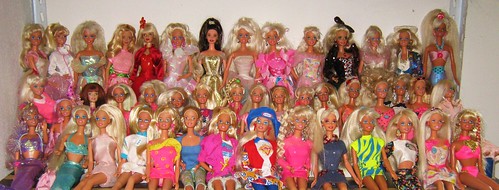 |
| Doesn't every girl want a shelf like this? ~HELPFUL LINKS~ social media is damaging to self esteem! how you use facebook determines your level of self esteem |
Sunday, December 1, 2013
Ana Mendieta
Ana Mendieta was a Cuban American performance artist, sculptor, and painter. She was born in 1948 in Havana, Cuba where her family actively partook in the country's politics. By the age of 12, Mendieta and her sister were sent to the United States by their parents in order to escape Fidel Castro's regime. She bounced around refugee centers and institutions before being reunited with her parents in the US. She attended the University of Iowa and earned her MA in Painting and MFA in Intermedia. Mendieta's work focuses on themes like feminism, violence, life, death, and nature.


A lot of her early work, such as Facial Hair Transplant, examined gender norms. In the portraits shown, Mendieta transfers the facial hair of her male friend to her own face. The process not only challenged what facial hair meant in regards to gender but also looks at the act of depilation. Some women choose to depilate in order to get rid of facial hair, but in this "transplant" Ana's goal is to have a beard.
The work she is most recognized for is her Silueta Series which combined land art, body art, and performance art. The series revealed Mendieta's interest in the earth and examined issues of displacement by recording her presence within different natural environments. She often filled the silhouette of her body on the earth with various materials such as rocks, twigs, flowers, blood, and gunpowder. "My art is grounded on the belief in one universal energy which runs though everything," she wrote in an artist's statement from the early 1980s, "from insect to man, from man to spectre, from spectre to plant, from plant to galaxy."

Ana is also known for using blood as a medium. One of her early performances was "Death of a Chicken." It featured a naked Ana standing in front of a white wall holding a flailing chicken. She would then decapitate it and let the blood splatter on her body. It's intention was to pay homage to santeria and the spiritual power of ancient cultures-that a lot of the time featured animal sacrifices and rituals. Her works also addresses violence against women like the video "Sweating blood"- A short video that features a close up of her face with blood eventually trickling down from her forehead. There is also the "Rape" performance where Ana invited people into her home to then see her bleeding and tied to a table, in response to the brutal rape and murder of a fellow University of Iowa student.

"Untitled" (Sweating Blood)
Unfortunatley Ana died in September of 1985 at the age of 36. She fell out the window from her 34th floor apartment in Greenwich Village after allegedly arguing with her her drunk husband, sculptor Carl Andre. However Andre was acquitted for insufficient evidence of any wrongdoing.
Her legacy and work has continued to make an impact after her death. Ana's work has been featured in many major public collections, including the Guggenheim, Metropolitan Museum of Art, Whitney Museum of American Art, Museum of Modern Art, Art Institute of Chicago, Centre Pompidou in Paris, Musée d'Art Moderne et Contemporain, and the Tate Collection in London.
Bibliography
- Mark Stevens. "Human Nature". New York Magazine. - http://nymag.com/nymetro/arts/art/reviews/9525/
- Sean O'Hagan. "Ana Mendieta: death of an artist foretold in blood." The Guardian. - http://www.theguardian.com/artanddesign/2013/sep/22/ana-mendieta-artist-work-foretold-death
- Lorena Muñoz-Alonso. "Ana Mendieta: Silueta and Silence." TT Contemporary Art Magazine. - http://www.thisistomorrow.info/viewArticle.aspx?artId=266
- Leslie Camhi. "Her Body, Herself." The New York Times. - http://www.nytimes.com/2004/06/20/arts/art-her-body-herself.html
- MOCA: http://www.moca.org/pc/viewArtWork.php?id=87
Subscribe to:
Posts (Atom)